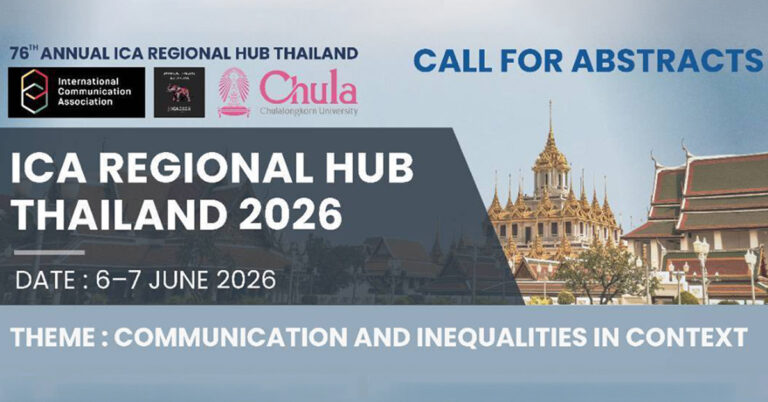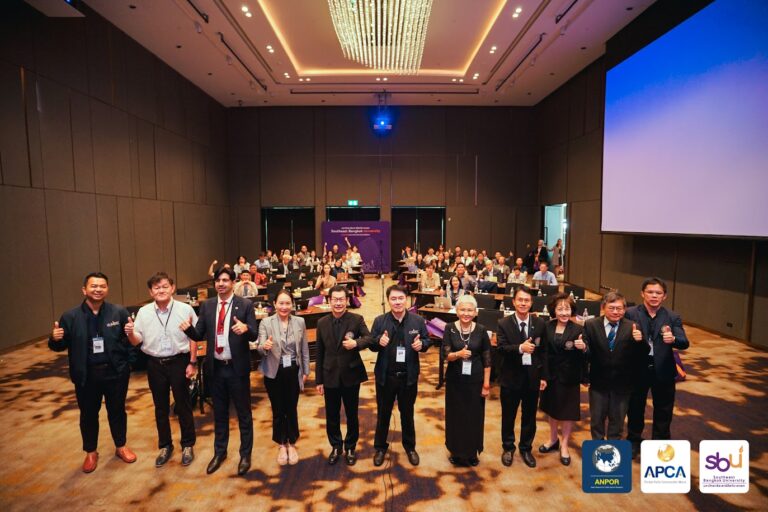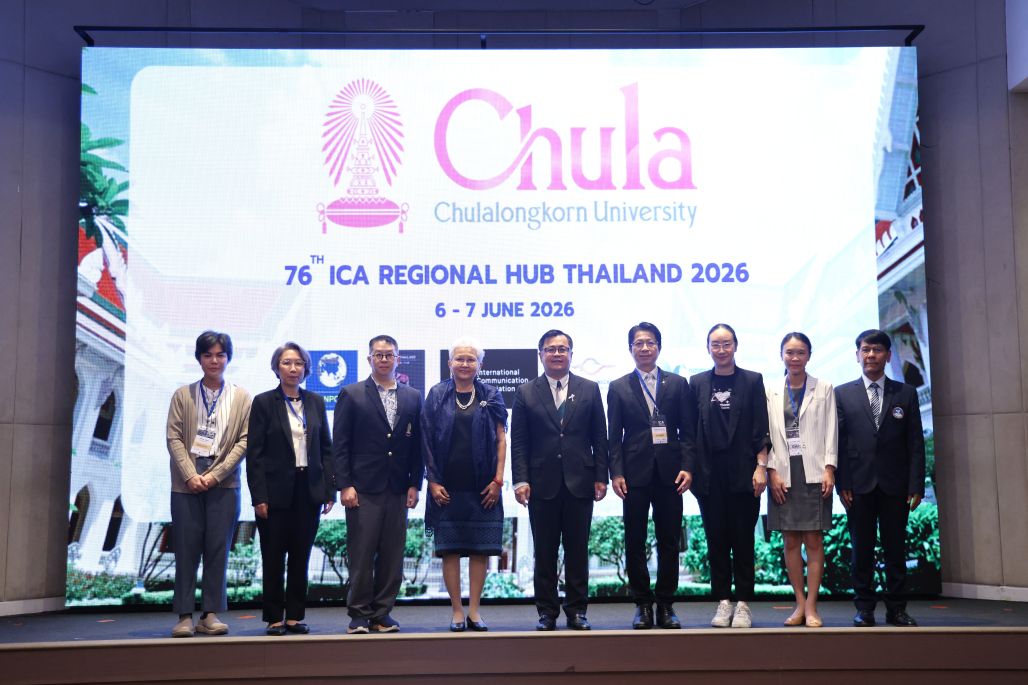
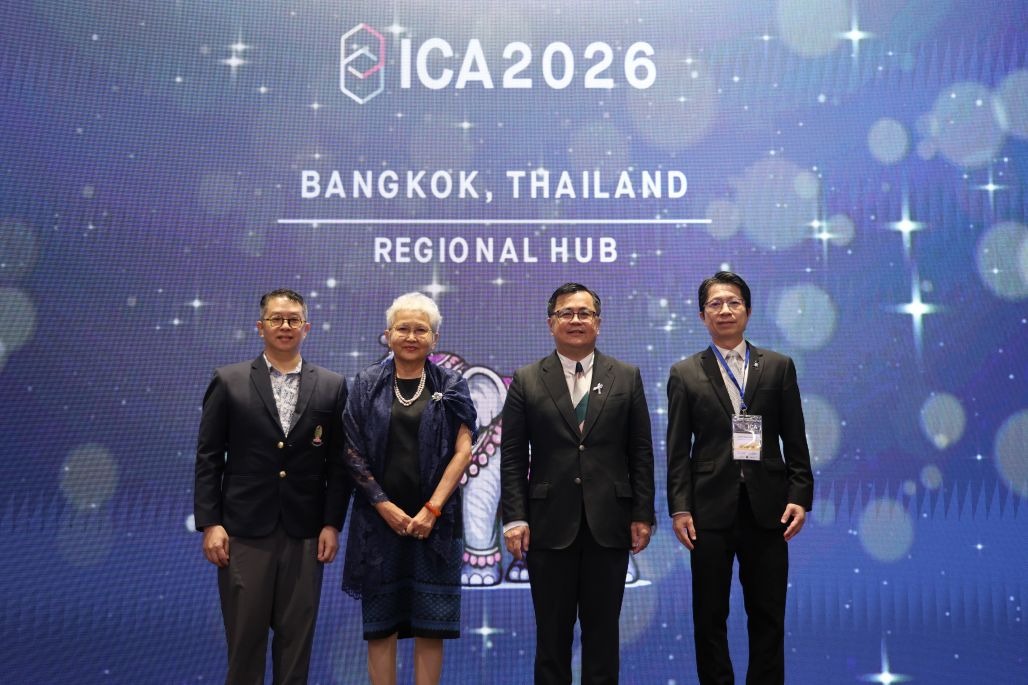
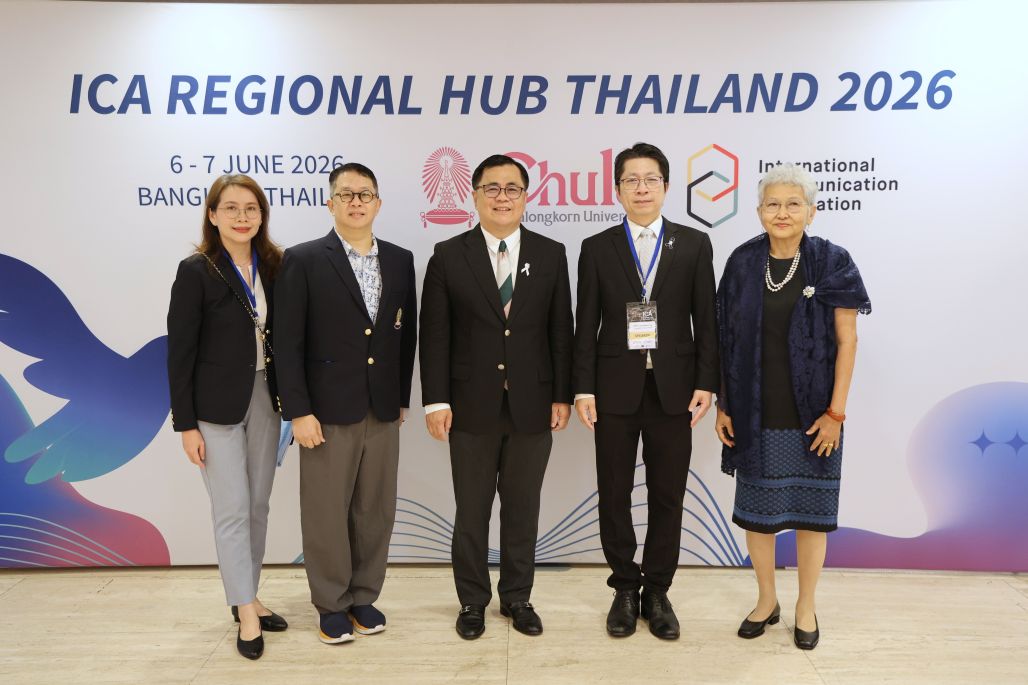
When delegates gathered at Chulalongkorn University on 6 June 2026, they were not simply attending another academic conference. They were witnessing a milestone: for the first time in the history of the International Communication Association (ICA) — one of the world’s foremost scholarly bodies in communication and media studies, founded in 1950 and spanning more than 80 countries — Thailand had become an official regional hub. And it was ANPOR that helped make it happen.
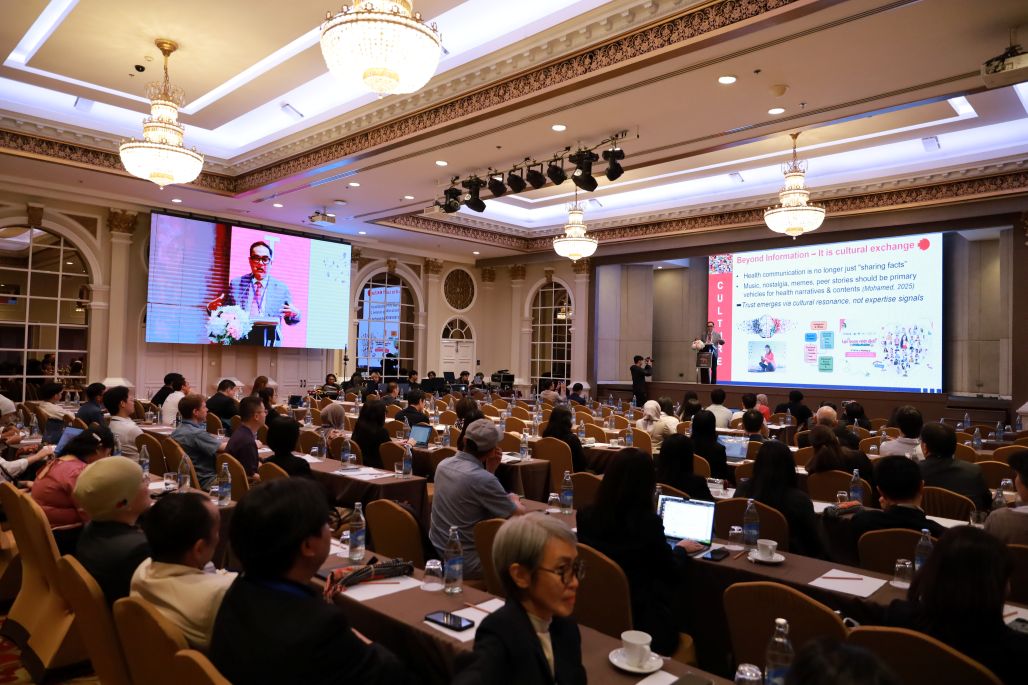
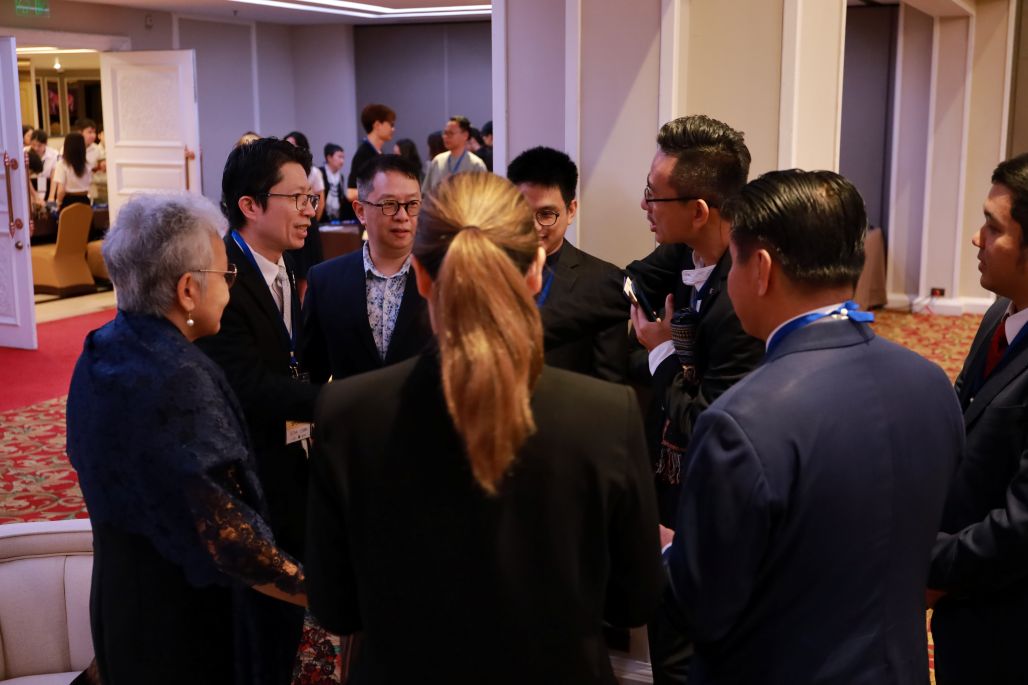
The Asian Network for Public Opinion Research (ANPOR) served as co-host and co-convener of the ICA Regional Hub Thailand 2026, running concurrently with the ICA’s 76th Annual Conference in Cape Town, South Africa. Held under the theme “Where Thailand, the Mekong Region, and Asia Bridge Divides and Amplify Voices,” the two-day hybrid conference brought together more than 200 scholars, media practitioners, policymakers, civil society advocates, and students — in person in Bangkok and online across the globe.
ANPOR at the Centre of a Historic Moment
The significance of ANPOR’s role cannot be overstated. As co-organiser alongside the Faculty of Communication Arts, Chulalongkorn University, ANPOR was not a peripheral partner — it was a driving institutional force behind the conference’s conception, design, and execution. The organisation brought its nine-country regional network, its two decades of cross-border research collaboration, and its track record of elevating Asian scholarship to bear on every facet of the programme.
ANPOR President, Professor Dr. Jantima Kheokao, delivered the opening remarks of the conference — a moment that crystallised ANPOR’s central place in the proceedings. In her address, she drew attention to the broader meaning of the event: not merely a scheduling coincidence with Cape Town, but a deliberate statement that Asian voices belong at the centre of global communication debates, not at their margins.
“This is not a satellite event. This is a centre of gravity.”
That framing — bold, unapologetic, grounded in ANPOR’s long-standing mission — set the tone for two days of rigorous academic exchange that reframed what “global” scholarship can look like when Asian institutions lead.
A Conference Built Around Regional Urgency
The choice of theme was not accidental. Thailand and the wider Mekong region are navigating a period of acute digital transformation: the rapid proliferation of generative AI, platform-driven misinformation, rising communication inequalities, and democratic stress-testing that demands scholarly interrogation — not just from the Global North, but from researchers embedded in the region itself.
The conference programme reflected precisely this urgency. Research presentations, special panel discussions, and expert masterclasses addressed a sweeping range of topics: artificial intelligence and platform governance, journalism and press freedom, digital media literacy, sustainability communication, public well-being, democratic participation, and the structural inequalities that shape who gets heard and who does not. Alongside the main programme, advanced methods masterclasses and research clinics were offered specifically to empower early-career and emerging scholars from Thailand and the Mekong sub-region — a concrete investment in the region’s future research capacity.
Critically, selected sessions were streamed live to the ICA Annual Conference in Cape Town, realising the hub’s promise of a genuinely two-way global exchange: Asian scholarship broadcast to the world stage, not merely received from it.
Anchoring a Partnership Ecosystem
The conference was made possible through a coalition of institutional partners that ANPOR helped to convene and coordinate. Alongside the Faculty of Communication Arts, Chulalongkorn University, and the ICA itself, the event was supported by the Council of Mass Communication Scholars of Thailand (C.M.C.T.) and the Thai Media Fund (Safe and Creative Media Development Fund), as well as additional academic partners including GSCM NIDA, the Faculty of Journalism and Mass Communication at Thammasat University, the Faculty of Mass Communication at Chiang Mai University, and the Faculty of Communication Sciences at Prince of Songkla University.
That breadth of partnership — cutting across Thailand’s major communication faculties, its national media policy bodies, and international scholarly organisations — reflects ANPOR’s unique institutional position: deeply rooted in Asian academic networks, yet consistently operating at the interface with global platforms of knowledge production.
Bangkok, Now a Node in the Global Knowledge Map
The establishment of Bangkok as an ICA Regional Hub carries implications well beyond this single conference. It signals institutional recognition — from the world’s leading communication studies organisation — that Thailand and the broader Asian region have the scholarly infrastructure, the research agenda, and the convening authority to host genuine global dialogue.
For ANPOR, this is both a vindication and a launchpad. The organisation’s nine-country research network across Asia, its leadership of multi-wave public opinion research programmes, and its sustained commitment to cross-border academic collaboration have made it a natural institutional anchor for this new role. The ICA Regional Hub Thailand 2026 is, in a meaningful sense, the most visible expression to date of what ANPOR was founded to do.
What Comes Next
The outputs from the Hub are designed to outlast the two-day programme. The conference aims to produce a Bangkok Hub Report, special journal issue proposals, and the foundations of the Thailand–Mekong Communication Research Consortium — a new thematic network for collaborative multi-country research. Full papers accepted through the conference’s review process will be considered for proceedings publication and affiliated journal submission.
ANPOR will continue to play an active convening role as these outputs develop — building on the momentum of Bangkok 2026 to deepen its partnerships, expand its research collaborations, and press forward with its mission of ensuring that public opinion research and communication scholarship from Asia carries the weight it deserves on the global stage.